
Every well-designed landscape relies on one critical element: proper water management. Without it, soil erosion, flooding, and plant decay can quickly undermine even the most beautiful outdoor spaces. For homeowners and property managers seeking reliable water drainage solutions in Johns Creek, effective systems are the key to preserving the longevity and health of their landscapes.
Understanding the Impact of Poor Drainage
Poor drainage doesn’t just create surface puddles; it disrupts the natural balance of the soil beneath. When water fails to drain efficiently, it oversaturates the ground, depriving roots of oxygen and weakening plant stability. Over time, this leads to root rot, compacted soil, and the eventual loss of vegetation.
Beyond aesthetics, poor drainage can also damage hardscape, patios, and retaining walls. Standing water exerts pressure on structural materials, causing cracks and gradual deterioration. In colder months, freezing and thawing cycles can worsen these effects, leading to expensive repairs and long-term instability.
Identifying Early Signs of Drainage Problems
Early detection can prevent extensive landscape damage. Warning signs include persistent sogginess, visible soil displacement, or pooling water around foundations and garden beds. Sloping irregularities often exacerbate these issues, redirecting runoff toward unintended areas.
Recognizing these indicators early allows professionals to design targeted interventions that restore natural water flow and protect soil structure before damage spreads.
Strategic Solutions for Effective Drainage
Effective drainage begins with understanding the property’s topography and soil composition. Professionals use these insights to implement engineered solutions that move excess water away efficiently.
Common approaches include French drains, swales, catch basins, and dry wells, all designed to redirect and disperse runoff safely. Properly installed systems ensure that rainwater and irrigation excesses flow away from plants, structures, and walkways without disrupting the landscape’s design.
Enhancing Functionality Through Precision Design
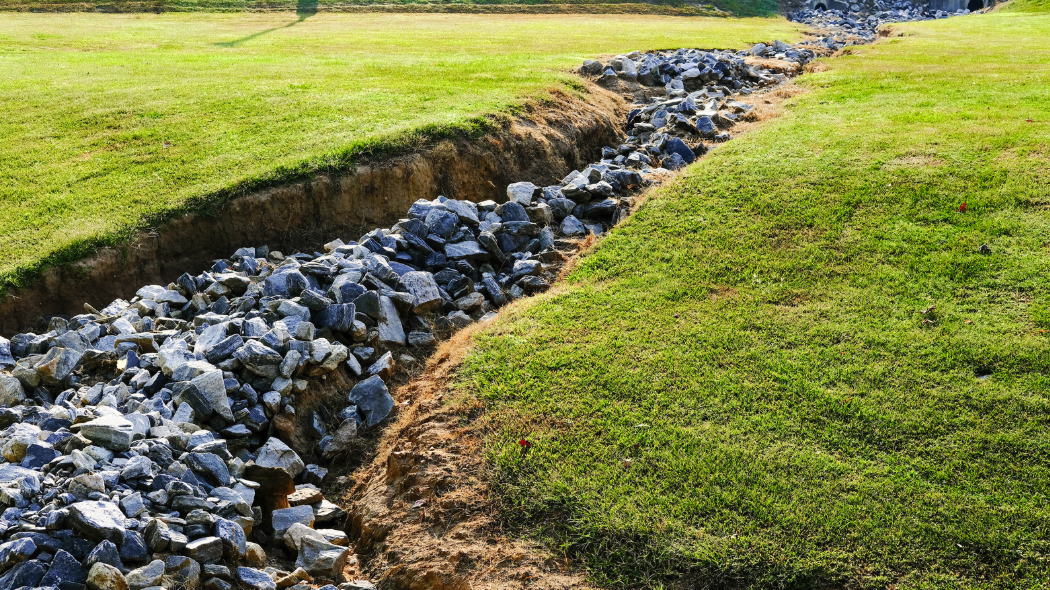
Drainage systems are most successful when integrated seamlessly with landscape aesthetics. For example, shallow channels or decorative gravel trenches can double as both design features and functional drainage routes. In larger areas, underground piping systems or retention areas manage significant runoff without compromising visual appeal.
Professionally engineered systems take into account rainfall intensity, slope, and soil absorption rates, ensuring long-term efficiency under varying weather conditions.
The Role of Professionals in Landscape Protection
While minor surface fixes may seem manageable, true landscape protection requires technical precision. Professional contractors analyze elevation, hydrology, and flow direction to design comprehensive drainage frameworks that prevent recurring issues.
Expert intervention ensures that solutions are not only effective but sustainable. Proper grading, installation, and maintenance extend system longevity and minimize future maintenance costs, preserving the integrity of both lawns and hardscapes.
The Importance of Tailored Approaches
No two properties face the same water challenges. That’s why customized solutions, whether through surface grading, trench drains, or subsurface piping, are critical for long-term performance. Professional assessments consider how different landscape elements interact and ensure that drainage adjustments complement both the functionality and design of the property.
Building Awareness of Sustainable Drainage Practices
An increasing number of property owners are turning toward environmentally responsible methods to manage runoff. Sustainable drainage incorporates eco-friendly techniques such as rain gardens, permeable pavers, and vegetation-based filtration systems. These approaches allow water to infiltrate naturally while reducing soil erosion and supporting local ecosystems.
Understanding effective backyard drainage solutions helps homeowners appreciate the science behind landscape protection. Integrating these methods ensures not only visual enhancement but also the preservation of soil health and environmental balance across the property.
Long-Term Benefits of Proper Drainage Systems
A well-executed drainage plan delivers measurable benefits. It reduces erosion, preserves plant vitality, and maintains the soil’s nutrient composition. Keeping water away from foundations and structural elements also prevents costly damage that can compromise the safety and value of a property.
Conclusion
Water drainage solutions play a crucial role in the longevity and resilience of any landscape. They safeguard the soil, preserve plant life, and protect surrounding structures from water-induced damage. By combining technical precision with sustainable design, professionals ensure that drainage systems support both function and aesthetics.
Ultimately, effective water management is more than just property maintenance; it’s an investment in the health and beauty of the environment that surrounds it.