

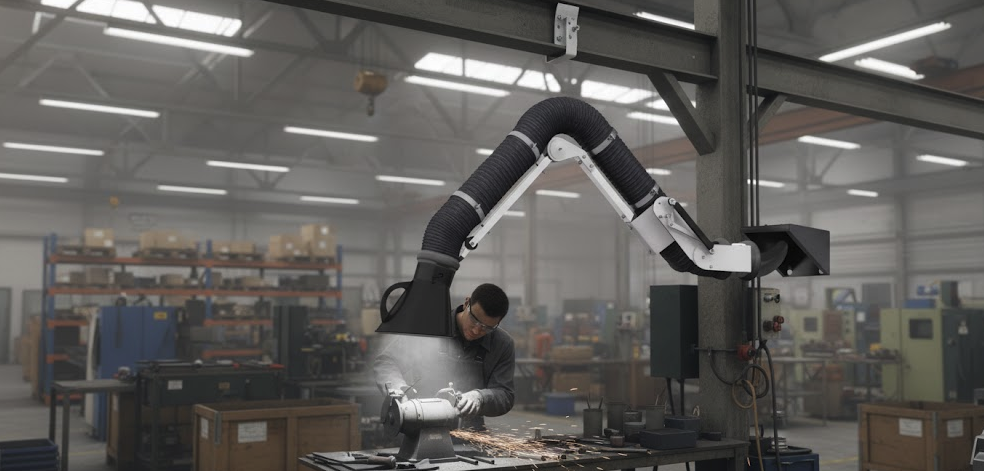
A well-designed fume control setup plays a vital role in maintaining clean, safe, and professional welding environments. With increasing demands for accuracy and efficiency, choosing equipment that offers dependable extraction is essential. The right solution not only improves air quality but also strengthens workflow and ensures welders can work comfortably. Incorporating welding exhaust arms within the first stage of planning helps create a controlled workspace where fumes are managed effectively from the start.
Understanding What Makes Exhaust Arms Effective
Before focusing on individual features, it’s helpful to understand why proper extraction equipment is so important. Welding generates a mixture of fine particles and gases that should be removed quickly and consistently. Exhaust arms play a central role by capturing fumes at the source, preventing them from spreading throughout the shop. They also support consistent airflow, which contributes to a healthier working environment and clearer visibility.
Reach and Positioning Capabilities
The reach of an exhaust arm determines how easily it can be positioned around various workpieces. In professional settings where welders frequently move between different stations, this flexibility becomes essential. A longer reach allows the arm to be adjusted precisely, ensuring fumes are captured directly at the point of origin. Properly engineered arms are built to stay in place once positioned, further reducing the effort required from workers and improving overall efficiency.
Flexibility for Varied Welding Tasks
Welding rarely happens in a fixed position, so an exhaust arm must adapt smoothly to different angles and heights. High-quality designs include joints that rotate easily, allowing the arm to follow the welder’s movement without interrupting the workflow. This flexibility ensures consistent fume capture, even during complex or multi-directional tasks. Professional systems also incorporate sturdy internal mechanisms that maintain stability and reliability throughout daily operations.
To further enhance the setup, many shops choose to integrate a smoke extractor for welding as part of a broader fume-control approach. When used alongside exhaust arms, it helps maintain balanced airflow across the workspace and supports precise extraction where needed most.
Airflow Strength and Efficiency
Airflow performance is another key factor when selecting the right exhaust arms. Strong, consistent airflow ensures fumes are pulled away at the correct speed, preventing them from lingering. The arm’s internal ducting, hood design, and mechanical components all influence how effectively air moves through the system. Professional-grade arms are engineered to maintain optimal suction even when extended or repositioned frequently.
Matching Equipment to Your Workspace
Every welding area is different, so selecting the right exhaust arms should be based on the size of the workspace, the type of welding performed, and the frequency of use. In tighter areas, a compact arm with smooth mobility may be more practical. Larger shops might benefit from multiple units installed strategically to maintain even airflow across all welding zones.
Conclusion
Selecting the right exhaust arms has a direct effect on workplace comfort, air quality, and overall productivity. By choosing equipment with strong reach, dependable flexibility, and reliable airflow performance, welding professionals can establish a cleaner and more efficient work area. High-quality systems also create better long-term stability, supporting consistent performance every day and helping maintain a safe and well-managed welding environment. Investing in dependable extraction solutions also enhances workflow precision, allowing welders to focus fully on their tasks without unnecessary interruptions.